
Exposed: How Barbieheimer & Saiyaara Used Digital Marketing to Rewrite Box Office Collection History
- Satesh singh
- Sep 9, 2025
- 8 min read

Despite using very different approaches, two revolutionary digital marketing phenomena completely changed how movies make huge Box Office Collection. "Saiyaara" in the 2025 box office collection stands at a staggering ₹570 crore worldwide using a controversial emotional strategy. This blurred the line between real feelings and planned PR tricks. In 2023, the "Barbenheimer" trend made $2.42 billion box office collection through engaging social media campaigns.
These different but effective strategies show how digital marketing has become a key force in box office collection. They show that understanding audience behavior and viral trends is more important than traditional advertising costs.
This article looks at the digital marketing strategies of Barbie, Oppenheimer, and Saiyaara. It examines the metrics and methods they used, such as social media reach, collaborations, budgets, and formats.
These strategies helped them succeed at the box office collection. By doing this, we compare two different ideas. One is the extreme "BarbieHimer" blitz. The other is Saiyaara's "less is more" approach. From this, we can give useful advice for movie marketers.

The Barbenheimer Phenomenon: When Opposites Attract Box Office Gold
Box Office collection Breakdowns: Barbie (WB/Mattel) became the biggest opening of 2023 right away with a domestic box office collection opening of an incredible $162 million. Together, the two movies brought in $311 million, one of the highest weekend totals ever. [1]
Oppenheimer had made over $900 million box office collection worldwide by September 2023, making it the highest-grossing biopic ever. In the meantime, Barbie eventually made over $1.4 billion box office collection. Surprisingly, these movies helped each other out: crowds flocked to double-feature “Barbenheimer” screenings, thereby boosting each film’s publicity.[2][3]
For Barbie, Mattel and Warner Bros. executed a once-in-a-generation campaign. Months before release, the internet became “pinker” than normal as Barbie-themed products and content exploded[4]. Mattel reported working with 165+ brand partners – everything from fast fashion and cosmetics to food chains – to “unleash a torrent of pink”.
On social media, Barbie’s team built a multichannel feast. They used TikTok a lot.
Barbie content on TikTok got many more views than on other platforms. This included an official AI filter that changed selfies into Barbie-like images.
In one Shorty Awards case study, the Barbie social campaign generated 179 million organic impressions and 17.6 million engagements[5]. The hashtag #BarbietheMovie alone amassed 4.6 billion views[6].
The movie’s owned social following grew by over 3 million in 2023[6]. In short, Barbie’s flood-the-market approach literally saturated pop culture, driving curiosity (and FOMO) that translated into enormous footfall.
Key Barbie Marketing Metrics: 179M organic impressions, 17.6M engagements[6]; 165+ brand partnerships[7]; #BarbieTheMovie TikTok views 4.6B[6]; Opening weekend $162M[8]. Estimated marketing spend ~$150M[9].
Oppenheimer took a different tack. Nolan’s films often rely on audience goodwill, and indeed Oppenheimer did benefit from nostalgic loyalty. But marketing still played a crucial role.
Universal’s emphasis was on theatrical experience: Nolan publicly promoted the film’s technical formats as key selling points. In interviews, Nolan called “IMAX 70mm” and “70mm” projections the “best possible experience”[10]. Oppenheimer was released on the rarest premium film formats (IMAX 70mm, 65mm) in select theaters[10]. This strategy highlighted exclusivity and spectacle, encouraging fans to seek out the special screenings.
Socially, Oppenheimer did not create viral dance trends like Barbie. Its content tended to be more measured. ComScore noted that while Avatar 2 enjoyed broad social engagement, Oppenheimer saw relatively higher traction on Facebook – hinting at an older demo[11].
In general, Oppenheimer’s team played up the Barbenheimer synergy: people leaned into the meme of these two films as a double feature, rather than pitting them as rivals[12].
Key Oppenheimer Marketing Metrics: $82.4M opening box office collection[1]; IMAX/70mm push[10]; UK premiere TikTok 24M views[13]; $900M total (biggest biopic ever)[14]; nine-figure ad spend[15].
Saiyaara's Staged Emotion Strategy: The Art of Manufactured Authenticity
"Saiyaara" had a great box office collection due to a well-planned campaign. This campaign used staged emotional reactions that seemed like real audience responses.
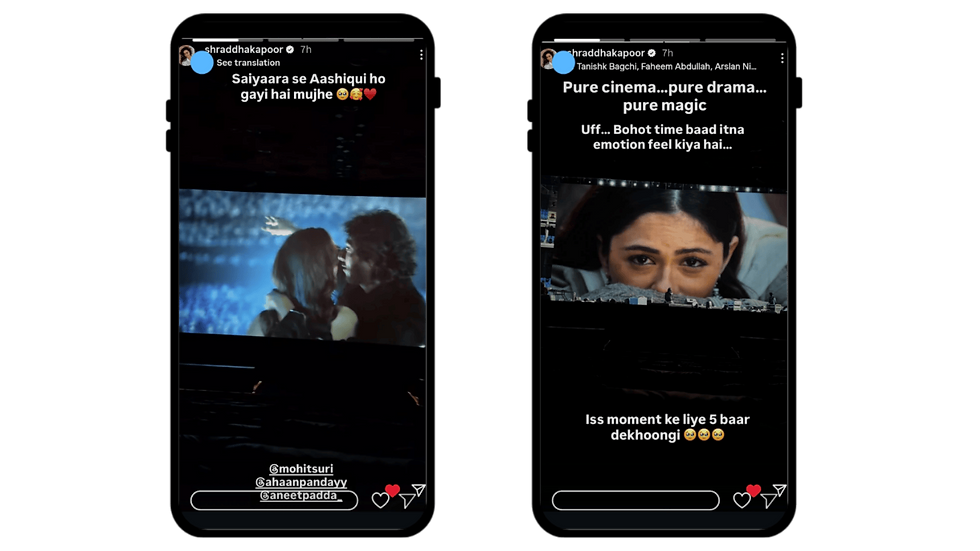
The film box office collection ₹570 crore worldwide by strategically deploying paid actors to create viral crying videos that triggered genuine emotional contagion among real audiences.[16][17][18]
Step 1: Planting Realistic Content, In tier II-III cities, amateur actors created crying videos. Micro-influencers also participated in making these videos. They focused on real emotional reactions instead of staged ones.
With captions like "Bro, this movie destroyed me" becoming popular on social media, these early videos showed couples leaving theaters in apparent emotional distress. The content felt grassroots rather than corporately produced thanks to the deliberate use of smaller markets.
Stage 2: Using Controversy to Amplification Fans fainting in theaters and a man watching with an IV drip were among the most widely shared incidents, which were purposefully set up to spark debate about authenticity.
Stage 3: Real Emotional Contagion and Natural Adoption. Real audiences who attended screenings expected a strong emotional experience. They had true emotional reactions to the staged content.
Key Saiyaara Marketing Metrics: ₹20cr Day-1 box office collection (4th highest opener of 2025); 274cr in 14 days; 324.5cr net after 31 days; 570cr gross final box office collection. No pre-release ads; relied on audience reaction videos. Title track YouTube ~386M views, entered Spotify Global Top 50.

Digital Marketing's Evolution: From Engagement to Manipulation
The success of both campaigns reveals a fundamental shift in how digital marketing drives box office collection success. Barbenheimer showed the power of real interactive engagement. Saiyaara proved that crafted emotions can also get good financial results through psychological tricks.
The Psychology of Viral Emotional Content
"Saiyaara's" strategy exploited the psychological principle of emotional contagion, people's tendency to mirror emotions they observe in others. By seeding realistic felt emotional reactions, the campaign created expectation frames that influenced genuine audience experiences.
The campaign's genius lay in understanding that authenticity could be constructed through careful staging. Unlike traditional advertising's obvious commercial intent, the crying videos felt real enough to trigger genuine emotional responses from subsequent viewers. This blurring of authentic and manufactured content represents a new frontier in digital marketing manipulation.[19]
Platform Algorithm Exploitation
Both campaigns demonstrated sophisticated understanding of social media algorithms, but through different mechanisms. Barbenheimer's AI selfie generator created massive amounts of shareable content that naturally aligned with platform preferences for user-generated material.
Saiyaara's emotional videos got more views because many people engaged with them. The platforms saw this crying and fainting content as very interesting. They decided to share it more widely.
The algorithmic amplification meant that even manufactured content could achieve organic reach if it successfully mimicked authentic emotional responses. This represents a sophisticated evolution in digital marketing, where understanding platform psychology becomes as important as understanding audience psychology.
Key Marketing Tactics and Takeaways
Leverage Branded Collaborations (Barbie): If the IP has broad appeal, integrate it with lifestyle brands. Barbie’s 100+ partner campaigns (apparel, beauty, food, tech) embedded the film into everyday culture. This creates continuous earned media and gets non-movie-buyers engaged.
Embrace Platform Demographics (TikTok vs. Facebook)[20]: Tailor content to the medium. Barbie's short, funny videos and filters did well on TikTok, getting millions of views. Oppenheimer's dramatic trailers and behind-the-scenes clips were popular with Facebook's older audience. Identify where your target demographic is active.
Create Viral Hooks (Barbie’s AI Filter, Saiyaara’s Music): Both franchises gave fans something fun to share. Barbie’s AI filter (“Barbie-fie”) and #BarbieTheMovie challenge generated user content en masse[21]. Saiyaara’s songs prompted covers and lip-syncs. A compelling, shareable piece of content can multiply reach organically.
Consider Regional Influencers (Saiyaara): Saiyaara’s team targeted micro-influencers in non-metro areas to seed the craze[22]. Film marketers should consider local social trends and “ambassadors” in smaller cities, not just national celebs. Grassroots enthusiasm can roll upward.
Balance Hype vs. Mystery: Barbie wanted all eyes on it from day one; Saiyaara wanted some suspense. Barbenheimer showed that fear of missing out (FOMO) can fill seats. The lesson: know your audience. If over-promotion feels stale, hold back. If awareness is low, shout it out.
Release Formats as Features: Make premium formats part of the pitch. Nolan’s promotion of IMAX 70mm screenings[10] gave fans a reason to pay extra or book early. Even Barbie touted its 3D/IMAX release (“Barbie pink is the new IMAX blue”) on social media. Highlight the event nature of the viewing experience.
Maximize Social Content (Short-form Video): Both Barbie and Saiyaara saw that short videos and reels are key. Create challenges, memes, behind-scenes snippets. Monitor for user content and amplify it. Expect younger audiences to discover content that way.
Track Metrics Closely: Use the data. Barbie marketers knew their 179M impressions and 17.6M engagements; Saiyaara’s teams likely monitored song chart positions and reaction video shares. Analytics can guide budget allocation – e.g. shift spend to a platform delivering traction.
Contrast with Competitor Releases: Barbenheimer became a narrative (“save the summer”) that helped both films. Saiyaara’s release avoided head-to-head chatter, instead riding its own wave of music hype. Be aware of other content releasing around you and strategize: collaborate, differentiate, or counterprogram as needed.
Budget vs. Creativity: Barbie’s case shows that a massive marketing budget ($150M[9]) can yield enormous returns if deployed creatively. But Saiyaara proves that a lean approach can outperform expectations if authenticity and strategic targeting are leveraged. ROI is not just about spending, but also spending smartly. For modest films, creativity and community can out-punch big-money campaigns.
Digital Clout Matters: Across all three films, digital buzz (social media metrics, influencer reach, viral content) correlated strongly with box-office momentum. In today’s age, a movie’s digital footprint can effectively become a second opening weekend promotion.
Cross-Industry Collaboration: Big campaigns unite industries. Barbie partnered with over 165 brands, blurring lines between movie marketing and retail promotion. These partnerships don’t just augment revenue; they co-create free advertising across media.
Regional Focus Pays Off: Saiyaara’s unusual focus on smaller-city influencers paid dividends. Saiyaara discovered a great audience in Tier 2 and Tier 3 cities in India. They then allowed the excitement to grow across the country. This suggests film marketers (even in Hollywood) should consider non-metro and international niches.
Audience as Marketers: Ultimately, fans did much of the marketing for Barbie and Saiyaara by sharing memes, fan art, cover songs, and reactions. Cultivate that by providing shareable assets (filters, templates, AR effects) and by publicly rewarding fan creativity.
Promote the Experience: If the film offers premium formats (IMAX, 3D, special screenings), highlight these in marketing. Make screening format a selling point (as Nolan did).
Learn and Evolve: Film marketing is an experiment. Use each campaign’s data (good or bad) as a case study. Barbie and Saiyaara show that very different strategies can both win big. The key is alignment: strategy must fit the film’s identity and audience.
Conclusion: The New Architecture of Box Office Collection
psychological concepts regarding how audiences interact with entertainment content in the digital age, both strategies were successful. Saiyaara took advantage of social proof mechanisms and emotional contagion, while Barbenheimer appealed to nostalgia and creative engagement.
The main point is that digital marketing has become a complex tool. It influences how audiences feel and what they know. It does more than just promote products.
Marketers will probably use both strategies in the future of entertainment marketing, incorporating Saiyaara's psychological manipulation techniques and Barbenheimer's data-driven platform optimization.
Movies that find a good balance between emotional impact and real engagement will get top at the box office collection. Audiences are becoming more sophisticated.
We at Harnium know that just like blockbuster movies such as Oppenheimer, Barbie, and Saiyaara gained attention through smart digital marketing, content creators too need the right push to shine. We help creators craft compelling stories that resonate with their audience. Our strategies ensure maximum visibility across platforms to attract more eyeballs. From trend-driven campaigns to engaging content formats, we drive growth that feels organic yet impactful. With Harnium, creators can transform their vision into a brand that captures attention and achieves real results.
Digital marketing is now the true hero of box office collection success. However, what heroism means here depends on our values. Do we value real connections or clever tricks to reach business goals?
References


Comments