
Sacred Season, Smart Digital Marketing Strategies and Plans: Religious Marketing at its Best

In an age of severe digital connectivity, faith and commercialism collide and create unique opportunities for brands to connect with consumers at some of the most spiritually significant times of the year.
Marketing Strategies and Plans during sacred seasons has evolved from straightforward seasonal promotions to highly stylized, culturally-informed campaigns that yield a respectable ROI while observing the sanctity of the religious season.
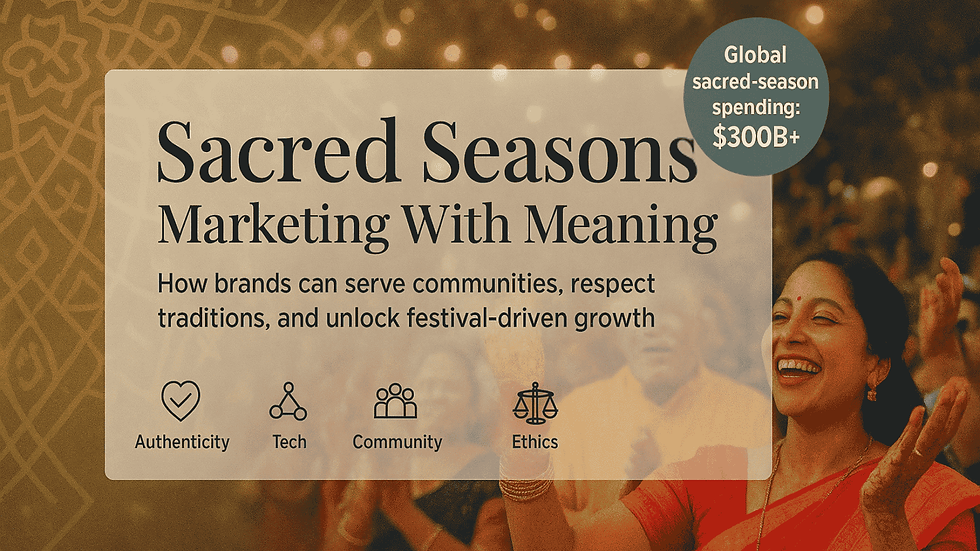
Global consumer spending on religious observances totals over $300 billion annually and brands who have robust processes to market directly to these sacred seasons will position themselves above consumers in the engagement and loyalty building process.
Sacred Seasons: Untapped Economic Potential
Religious festivals and sacred seasons are some of the most valuable times of the year for retail and global commerce. Diwali 2024 generated $22 billion alone in consumer spending, and Christmas continues to drive the global economy with $75 billion in retail sales in North America over the holiday season.
The Chinese New Year generates $156 billion in consumer spending and Ramadan alone triggers about $32 billion in retail spending in the MENA region. The evidence of religious Marketing Strategies and Plans and their value in terms of economic impact is telling, with consumption driven by festivals and sacred seasons accounting for up to 40% of annual total sales for many companies from home décor to luxury cars.
The festival economy generates the multiplier effect; for example, India's festive season of spending was estimated at ₹4.65 lakh crore, which translated into an estimated ₹30.99 lakh crore impact when economic multipliers were applied. Given the increase in spending associated with festivals, the festival economy is not limited only to consumer behaviours but also results in employment generation.
In fact, more than 12 lakh gig roles were posted during India's 2024 festive season alone, which shows a 23% growth from the previous year.
Transformation of Consumer Behavior During Sacred Seasons
Sacred Seasons fundamentally reshape consumer psychology and spending behavior. In Ramadan, for example, total consumer spending is reported as rising 30-40% compared to other months.
According to one research study, 81% of consumers who celebrate Ramadan reported using an increased amount of mobile devices during the month, and 74% indicated increased social media activity during the month as well. In a similar vein, Diwali sees 36.18% of Indian households spending more for the holiday, with 85% of millennials and generational peers reporting an increased preference for online shopping channels for their holiday purchases.
The Four Stages of Religious Consumer Behavior
Generally speaking, religious festivals occur in distinct phases that require different Marketing Strategies and Plans approaches:
Pre-Festival Preparation (Anticipation Phase): Consumers engage with increased interest in spiritual content, decorum in their homes, and gift planning. There generally are spikes in online searches for religious content and related festive-themed food recipes.
Early Festival Period (Mindfulness Phase): Consumer engagement with online content reaches the highest levels when fasts occur, and habits of reflection and mindfulness lead to increased consumption of online content. For example, there has been observed rise in social media and video-generated consumption by 30-40%.
Main Festival Celebration (Peak Shopping Phase): 53% of consumers expect to spend more at this time, which is primarily driven by purchasing gifts and preparing for family gatherings where they will be the largest single commercial activity for consumers.
Post-Festival Integration (Loyalty Building Phase): The focus shifts to sharing behaviors, communicating gratitude, and endearing feelings towards maintain the relationship between brands and consumers.
Digital Strategy Frameworks for Sacred Season Marketing
1. Authentic Cultural Integration Strategy
Successful religious Marketing Strategies and Plans begins with authentic cultural integration rather than superficial seasonal themes. Brands must demonstrate genuine understanding and respect for religious traditions, avoiding the trap of cultural appropriation or insensitive messaging.
Best Practice Example: Cadbury's award-winning Diwali campaigns featuring Shah Rukh Khan successfully combined emotional storytelling with authentic cultural elements, focusing on community values and real-world connections rather than virtual greetings. The campaign encouraged personal visits and emphasized that "genuine sweetness lies in togetherness," resonating deeply with traditional values while addressing modern digital disconnection concerns.
2. Multi-Channel Orchestration Approach
Effective sacred season Marketing Strategies and Plans requires coordinated campaigns across multiple digital touchpoints. Brands investing in multi-channel approaches during religious festivals see 5x greater marketing returns compared to single-channel strategies.
Channel Prioritization Matrix:
Social Media Platforms: 35% budget allocation for real-time engagement
Content Marketing: 25% for storytelling and value-driven content
Influencer Partnerships: 20% for authentic community connections
Traditional Media Integration: 12% for broad reach and credibility
Experiential Campaigns: 8% for memorable brand interactions
3. Personalization via Cultural Segmentation
The effectiveness of religious marketing can be increased tremendously if brands adopt advanced cultural segmentation. Marketing Strategies and Plans based on religious observance trends, traditions in the region, and cultural preferences can yield a 240% improved ROI via hyper-targeted advertising.
More advanced personalization includes the following:
Geolocation-based messaging tailored to local religious customs
Language localization that goes beyond translation to cultural adaptation
Religious calendar integration for optimal timing of promotional activities
Community-specific influencer partnerships for authentic endorsements
Advancing Personalization Through Technology-Driven Sacred Season Innovations
AI and Predictive Analytics
AI-enabled marketing platforms allow brands to anticipate religious shopping trends and deploy their Marketing Strategies and Plans. Machine learning segmented by geography can factor consumer intent as much as 62% increases for faith-based festivals such as Diwali and allow for preemptive Marketing Strategies and Plans modifications and inventory management.
Increasing the Use of Augmented Reality Experiences
The use of AR filters and virtual try-on experiences in the shopping experience has gained momentum, particularly in the fashion and beauty category. Sugar Cosmetics, for instance, leverages Instagram filters during Diwali that allow users to sample different lipstick shades.
This experience improves engagement and leads to decreasing online return percentages. Similarly, LEGO offers the "Holiday Gift Builder" AR experience that enables customers to visualize products inside their homes. This addresses consumer concerns about size and complexity while creating a memorable shopping experience - and builds anticipation of products arriving in the customer's home.
Voice + Conversational Marketing Strategies and Plans
Combining voice technology-based interactions with religiously contextualized marketing allows brands to create intimate, personal touchpoints with the consumer. For instance, a WhatsApp Business API or SMS micro-campaign during an engagement period generates superior open and engagement rates than email marketing during an engagement period when targeting releases.
Technological Advancements for Religious Holidays

Advanced AI and Predictive Analytics
AI-enabled marketing channels offer brands the ability to predict religious shopping behaviors and optimize campaign delivery. Data analytics focused on machine learning can predict consumer intent by more than 62% for holidays like Diwali, helping brands make adjustments on campaign planning and inventory management.
AR Experiences
AR filters and virtual try-on experiences during holidays have garnered tremendous growth, especially in the fashion/beauty category. Sugar Cosmetics creates Dyali Instagram filters that allow users to virtually test lipstick shades, ultimately reducing return rates, while encouraging greater brand engagement. For example, LEGO's "Holiday Gift Builder" AR (and brick) experience allows customers to visualize LEGO products in their homes, demonstrating size and complexity and creating holiday memories throughout the purchasing experience.
Voice and Conversational Marketing
The integration of voice technology with religious Marketing Strategies and Plans creates intimate, personal connections. WhatsApp Business API and SMS micro-campaigns during religious festivals achieve higher open rates and engagement compared to traditional email marketing.
Ethical Considerations and Trust Building
Religious Marketing Strategies and Plans entails a set of ethical obligations that, among other things, affects the effectiveness of campaigns and the brand's reputation. Today, 71% of brands measure ROI from campaigns, while 68% of consumers will pay a premium for environmentally sustainable offerings from ethical brands.
Trust and ROI
Ethical Marketing Strategies and Plans practices are strongly related to campaign performance. Brands that exhibit transparency, cultural sensitivity, and social responsibility have brand trust scores of 88-90%, compared to 75-82% for traditional brands.
In addition, this trust premium has real business value; ethical brands retain customers at a rate of 85% higher than traditional brands.
Applying Ethical Frameworks
Religious Marketing Strategies and Plans should incorporate a broad set of ethical guidelines:
Transparency Standards: 88% implementation rating for brands that are open about their values and practices.
Cultural Sensitivity: 82% effectiveness rating for marketing campaigns that are respectful of and challenge religious traditions.
Social Responsibility: 90% approval rating from consumers on brands that have charities and causes as a part of their DNA.
Data Privacy Protection: Brands that show clear data usage policies saw a 85% improvement in consumer trust levels.
Regional Similarities and Global Methods
India
The capacity of the Indian market, particularly during the festive season, to engage in religious marketing illustrates one of the most detailed religious marketing environments in the world. The impact on patronage during this festive time will drive an uptick of consumption for individual state GDPs and averages up to 2.58%.
As some evidence of purchasing power, in 2021, the Durga Puja festival in West Bengal accounted for nearly ₹32,377 crores economic impact. Indian brands are drawing on the nuanced relationship between religion and consumption through sophisticated digital channels:
Early Launch of Campaign: Effective campaigns are launched 4-6 weeks prior to your festival, to capture the attention of early shoppers and create expectation.
Adoption of Hyperlocal E-commerce: Fast commerce platforms such as Flipkart Minutes (delivers in 10 minutes) are effective in capturing impulsive spend driven often by shoppers in search of dry fruits to buy, festive groceries as well as home décor items.
A Strong Influencer Eco-System: Brands have developed partnerships with local influencers to develop content that reflects the local culture, family-centric traditions and community values.
Strategies for Ramadan Marketing in the Middle East
Successful execution of Ramadan marketing in MENA really requires an understanding of how each day of Ramadan is going to adjust the daily routine of the consumer and what the priority is for community.
All consumer behavior will change during Ramadan depending on what phase of Ramadan the customer is in, including late night retailers marketing after iftar and the importance of mobile commerce, which accounted for 74% of sales during Ramadan, a majority of which were using smartphones.
Successful Ramadan campaigns show modesty with:
Empathy-driven marketing messaging that has acknowledgment of fasting and brings communities together.
Business operations that consider flexibility in hours of service, in consideration of Iftar.
The charitable integration of the marketplace as part of the customs of Zakat and charitable giving.
Approach to the Christmas Market in Western Society
When engaging in Christmas Marketing Strategies and Plans in North America and Europe, emotion-based storytelling is a weighted foundation, alongside the nostalgia aesthetic shared between people and brands.
The average household in the U.S.A. spends $1,000 on purchases associated with the holiday period, while Canadian households spend $1,500 on Christmas related purchases - which includes the holi-day marketing as much as holiday marketing.
Key Success Factors:
Creative Innovation: Engaging experiences, augmented reality, and new platforms will position brands differently in saturated markets.
Timing Optimization: Initiatives that start before the first week of December to grab the early organized consumer (not procrastinator).
Focus on Premium Experiences. In by design, 74% of consumers state they hold brand experiences in higher esteem than simply discounting for positions or even causing purchase motivation.
Return on Investment Measurements and Performance Metrics
Any measure of effectiveness when engaging in religious Marketing Strategies and Plans requires multi-level behaviors to detail attribution models; tangible and intangible benefits. Acting on ROI for any campaign will require some balance of financial indicators along with brand (equity) assessments, community assessment, and loyalty measure over a period of time for indicative positioning.
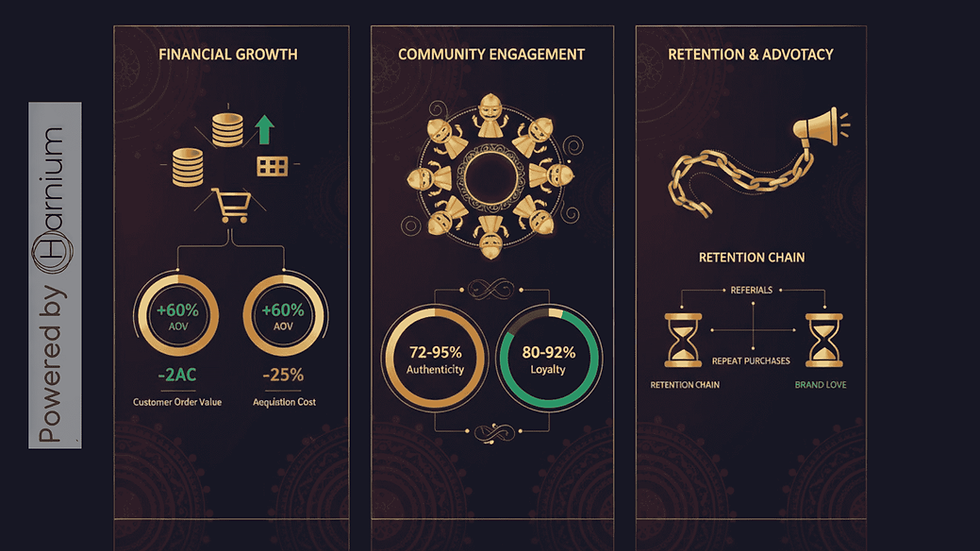
Key Performance Indicator Map/Facts
Financial Indicators:
• Direct revenue attribution during festival weeks
• Reduction in customer acquisition costs (generally 15-25% lower costs over religious seasons).
• Average Order Value increases - (30-60% increases during peak festival weeks).
Brand Equity Analytics
• Community engagement metrics (with a range of 72-95% depending on the strategy)
• Cultural authenticity metrics (80-92% for campaigns with success)
• Consumer loyalty index increases (72-90% correlation with ethical marketing)
Long-term Impact Evaluations
• Retention of customers after festival
• Referrals of the brand and word of mouth
• Effectiveness of campaigns across festival time periods
Use of Technology and Trends for the Future
Emerging Religious Marketing Technology
Utilization of blockchain for authenticity verification: Blockchain technology enhances consumers trust and credibility of a campaign in the area of authenticity of production and transparency in donation to charity.
Internet of Things (IOT) applications: Home smart devices will enable brands to seamlessly fit within religious context, or reminder type of content, e.g., a festival preparation reminder, will soon be automatic when introducing religious context.
5G-Driven experience: Ultra-fast connectivity allows for real-time virtual experience of a religious celebratory moment, and provides opportunities for brand sponsorship in new venues of community.
Artificial Intelligence Applications
Predictive Consumer Modeling: Using AI algorithms to analyze prior religious shopping data enable forecasting demand spikes to inform inventory distribution for various festival phases.
Dynamic Creative Optimization: Machine learning platforms can automatically apply campaign creativity changes in real-time based on recent engagement data, cultural preferences and major events occurring on a religious calendar.
Sentiment Analysis Inclusion: AI programmed Natural Language Processing, that allow monitoring and gathering data on social media conversations surrounding religious festivals, can be used by brands to proactively adjust their messaging tone and overall content strategy.
Facilitating long-term success in the sacred season
Establishing Community Partnerships
To have lasting success with your religiously-oriented Marketing Strategies and Plans, it's important to establish authentic community partnerships that go beyond the role of a mere commercial transaction. Brands with community engagement scores of 95% or higher, develop partnerships to create and maintain long-term relationships rather than focusing solely on short-term sales objectives.
Examples of partnerships might include:
Partnership with Religious Institutions: Working with temples, churches, mosques, or community centers to assist with legitimate religious life.
Partnership with Cultural Organizations: Working with organizations focused on preserving culture and traditional artwork.
Funding Educational Projects: Funding supporting religious education projects or culture literacy projects.
Evolution of Content Strategy
Successful sacred season content specific to meaningful, religiously-oriented marketing focuses on delivering real value to religious communities, rather than just promotional messaging. Value-added focused content Marketing Strategies and Plans can achieve cultural authenticity scores of 85% while also maintaining consumer loyalty ratings of 78%.
Examples of successful approaches are:
• Providing educational content about religious traditions and application to modern life
• Taking the community behind the scenes to view the process of developing an authentic product
• Promoting authentic experiences by passing the camera to community members in their own experiences
• Interviews with religious experts, linguistic retailers, or historians
Risk Management and Crisis Prevention
As mentioned previously, religiously-oriented Marketing Strategies and Plans carries some risk and requires some thoughtful proactive management. Inappropriately conducting religiously-oriented marketing can create significant reputational harm as well as prompting boycotts from consumers as has happened to some brands for being insensitive with their religious depictions.
Framework for Crisis Prevention
Cultural Advisory Boards: Creating permanent advisory committees that include a range of representative from religious communities will ensure ongoing review of sensitivity to campaigns.
Pre-Launch Testing Protocols: Testing with your target religious communities prior to public campaign development in a comprehensive way provides opportunities to anticipate and identify potential issues.
Rapid Response Protocols: Having established protocols which prepare campaign communications to respond quickly and mitigate crisis is important when cultural errors occur.
Culmination: Future Outlook for Sacred Season Marketing
Sacred season Marketing Strategies and Plans is not only a new and evolving category of digital marketing from purely transactional promotion, but also a form of community engagement with purpose. Brands that genuinely invest time and effort in understanding cultural heritage, cultural ethics, and innovative technology create continued sustainable competitive advantages that go beyond cultural periods/festivals.
Data solidly demonstrates that when religious marketing is done with respect and cultural authenticity consumers can expect a significantly greater ROI and a relationship that builds a lasting consumer family.
With the continuation of advances in digital technology and greater consumer expectations for authentic brands, the principles for sacred season marketing will continue to central to an overall digital Marketing Strategies and Plans.
Successful brands will develop a mindset that considers religious marketing not just as seasonal opportunity exploitation, but a year long commitment to serving and supporting communities that make their brand thrive.
This evolves marketing into success metrics beyond promotional media to holistic measure of brands impact on individuals, community health, and cultural continuity and responsibilities.
As we enter an age in which consumers want brands that reflect their truest values and beliefs, sacred season marketing is the ideal vehicle for showcasing lived authentic purpose beyond profit. The brands that find this elusive balance will no longer be marketing during sacred seasons, but instead will find themselves embedded in the holiday traditions they respect and honor.
The future will belong to marketers who understand that in the space of religion and culture marketing, the highest ROI does not come from commodifying faith for financial gain, but through real, genuine service to the communities who give sacred seasons their meaning. This is religious Marketing Strategies and Plans at its best: smart, respectful, effective, and eternally sustainable.


Comments