
Why Google Digital Marketing Is a Must for Every Business in 2025

In the rapidly changing world of digital commerce, Google digital marketing has become the cornerstone for growth, visibility, and success for all businesses. As we move toward 2025, utilizing the Google digital marketing strategy is no longer optional, but essential.
What is Google Digital Marketing?
Digital marketing has change dramatically in the last decade, with Google digital marketing at the center. By taking advantage of Google's unparalleled ecosystem including search, display, video, shopping, and analytics businesses can target with precision, measure results in real time, and optimize and re-optimize campaigns to get the best bang for their buck.
Whether you are a local brick and mortar retailer, a fast-growing start-up, or a multinational corporation, all forms of Google digital marketing have the tools, data, and reach to engage with potential customers at all stages of the buying journey.

Google digital marketing has maps to engage with the potential customer from brand awareness, to driving sales, and customer loyalty. The best Google digital marketing strategies will get your ad in front of the right person, on the right device, and at the right time.
Rationale for Google Digital Marketing in 2025
1. Unmatched Reach and Audience Targeting
Google’s properties account for 5 billion searches a day, plus billions of daily views of YouTube videos, plus access to the Google Display Network across millions of websites and apps. By utilizing Google digital marketing, businesses can:
• Reach users looking for products and services.
• Retarget users that visited their website with display and video ads.
• Segment audiences based on demographics, interests, and behaviours.
• Use geo-targeting at the city or zip code level.
The combination of scale and the precision of Google digital marketing reach guarantees your ads are in front of high-intent prospects prepared to convert.
2. Data-Driven Decision Making
At its heart, Google digital marketing is founded on data. Google Analytics, Google Ads, and Campaign Manager allow just-in-time visibility into impressions, clicks, conversions, and user paths. This feedback loop allows businesses to:
• Determine which keywords and ad creatives perform the best
• Optimize bid strategies based on conversion reporting
• A/B test landing pages and ad copy
• Track customer lifetime value and attribution models
Data-optimized decision making allows for the Google digital marketing budget to be spent in the most effective areas for ROI and to eliminate wasted spending.
3. Scalability and Flexibility
Regardless of whether a business starts with a small daily budget or scales to millions in annual ad spend, Google's digital marketing platforms offer their potential to businesses of all sizes and stages of development. Particularly with campaign types like Search and Display ads, Shopping ads, Video Ads, and Performance Max, Google digital marketing provides flexibility to:
• Launch a campaign nationally or globally.
• Support niche local promotions.
• Test a new market or demographic segment with little risk.
• Scale a successful campaign with increased budget allocation and/or wider targeting.
This scalability is one of the reasons why Google digital marketing is best suited for the nimble business that seeks to expand quickly and within the parameters of being cost-efficient.

4. Integration with the Google Ecosystem
Beyond the scalability of Google Ads platforms, another major advantage of digital marketing with Google is the seamless integration with Google’s ecosystem of products and services:
• Google My Business listings increase visibility to improve local SEO results and rank on Google Maps.
• YouTube Ads capture customer engagement through interactive video ads.
• Google Merchant Center provide foundational support for retail Shopping Ads.
• Google Tag Manager simplifies analytics and conversion tracking processes and reporting usage in one repository.
By leveraging this unified ecosystem, all businesses are able to combine data, automate workflows and processes, and maintain a consistent brand identity across every customer touchpoint.
Key Elements of Google Digital Marketing
To maximize the benefits of Google digital marketing in 2025, marketers should focus on five core components:
1. Google Search Ads
Search Ads allow your business to appear above Google’s search engine result pages (SERPs) for relevant searches. A well-implemented Google digital marketing plan should include:
• in-depth keyword research to discover valuable high-intent searches,
• copy that is optimized for click-through rate and Quality Score,
• ad extensions that increase the size of your ad (sitelinks, callouts, call extensions),
• smart bidding strategies (target CPA, maximize conversions)
Search Ads are the foundation of Google digital marketing, capturing the demand exactly when people are looking for your solutions.
2. Google Display Network:
The Google Display Network (GDN) reaches more than two million websites and apps, so you can run banner, responsive, and rich media ads, Google digital marketing on Display Network includes:
• Audience targeting through affinity grouping, in-market audiences, and custom intent.
• Contextual targeting based on topics, phrases, keyword, and placements.
• Creative optimization for different types and sizes of ads
• Frequency capping to avoid ad fatigue.
Display campaigns shine in brand awareness and retargeting, keeping your product top-of-mind across millions of digital inventories.
3. Advertising on YouTube
With a staggering 2.5 billion monthly active users, YouTube gives unmatched video exposure. When you combine Google digital marketing with YouTube Ads you get:
• TrueView in-stream ads that only charge when viewers have watched at least 30 seconds of the ad.
• Bumper ads allow for the short and sweet ad messages.
• Video discovery ads appear next to related video content.
• Robust targeting that uses demographics and interests and even custom audiences.
YouTube Ads elicit emotional connection and greater affinity for brands, which enhances search and display activity.
4. Google Shopping and Local Inventory Ads
For e-commerce and retail businesses, Google digital marketing includes Shopping Ads that show images of products, prices, and merchant names right in SERPs. The fundamentals of Shopping Ads are:
• Optimized product feed in Google Merchant Centre.
• Custom labels and product grouping for bid management.
• Local Inventory Ads showing in-stock inventory.
• Smart Shopping campaigns automate bidding and placements.
Overall, Shopping Ads connect online and offline inventory and create seamless omnichannel experiences for consumers.
5. Performance Max campaigns
Performance Max is the most recent way to optimize Google advertising, as this campaign provides a unified Google ads experience across multiple Google ads channels. It is a campaign where automation handles targeting and bidding across Search, Display, YouTube, Discover, and Gmail. Any strong Google digital marketing blueprint accounts for Performance Max campaigns for:
- Streamline campaign execution.
- Leverage Google's AI-enabled auction insights.
- Generate goals like leads, purchases, or traffic to stores under one budget.
Performance Max represents the future of Google digital marketing by maximizing conversions with complete, automated strategies.

Success Stories in the Real World
Case Study: Local Retailer Increases In-Store Foot Traffic
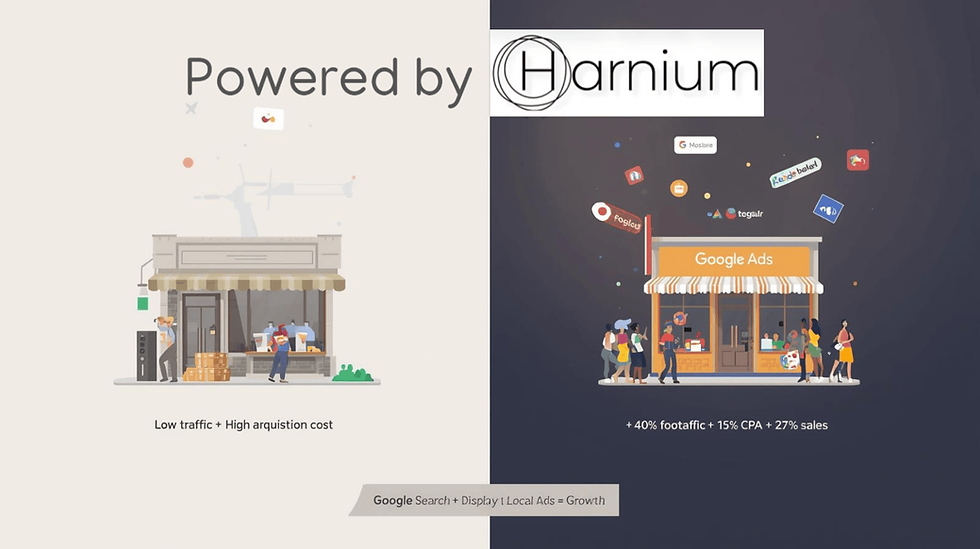
A local apparel retailer created a multi-channel Google digital marketing strategy using Search, Display Retargeting, and Local Inventory Ads. They were able to optimize Google My Business and enhance store-visit conversion tracking, and they realized:
- 40% increase in foot traffic to their store in 3 months.
- 25% increase in consumer spending year over year.
- 15% decrease in cost per acquisition across all digital channels.
This experience clearly demonstrates how successful Google digital marketing creates a bridge between online engagement and in-store sales.
Case Study: SaaS Company Grows Leads by 300%
A B2B software-as-a-service company used advanced Google digital marketing tactics, like account-based targeting, in-market audiences, and Performance Max, to obtain enterprise-level leads. They demonstrated success in:
- 300% increase in qualified demo requests.
- 50% decreased cost per lead.
- 20% increase in landing page conversion through A/B testing.
Utilizing the complete set of Google digital marketing tools enabled the SaaS company to dominate their niche keywords and surpass the competition.
Predictions for the Future of Google Digital Marketing
As 2025 comes into view, we will see trends that will guide Google digital marketing strategies:
1. AI-Driven Optimization
Google’s AI and machine learning add new levels of sophistication to bidding, targeting, and creative testing with tools such as:
- Automation via Performance Max
- Automated audience growing capabilities
- Responsive Search Ads which dynamically combine assets
These tools make Google digital marketing smarter, allowing Google marketers to use their skills on strategy tailored to each situation rather than manually optimizing.
2. Privacy-First Advertising
As data privacy regulations evolve and cookies are phased out, Google digital marketing will rely on:
- First-party data collection through Consent Mode and enhanced conversions
- Google’s Privacy Sandbox initiatives
- Aggregated measurement with the “ad click attribution” API
Marketers will need to alter Google digital marketing campaigns for a privacy centric ecosystem balancing response and personalization with privacy.
3. Immersive Ad Formats
The introduction of augmented reality (AR) and interactive video ads alongside shoppable ads on YouTube and Discover will further elevate Google digital marketing:
• Experiences of products in 3D.
• Click-to-buy overlays.
• Interactive polls and lead-generation surveys/queries.
These immersive experiences develop engagement, whilst simplifying the purchase journey.
4. Cross-Channel Attribution
Gaining visibility into how the customer journey unfolds across search, social, email and offline channels is critical. Google digital marketing will become increasingly solutioned from:
• Data-driven attribution models.
• Advanced conversion tracking in Google Analytics 4.
• Joined insights with the Google Marketing Platform.
Holistic attribution helps pay media marketers ensure they're attributing credit to the right media channels whilst optimizing the Google digital marketing mix to effect true incremental growth.
Building Your Google Digital Marketing Strategy
If you’re looking to embed Google digital marketing into the DNA of your organization, there are a few steps that you can take:
1. Clearly Define Objectives
Establish Key Performance Indicators (KPIs), such as sales, leads or store visits, as they relate to your business goals. If you don’t have a measurable objective, your Google digital marketing strategy can become directionless.
2. Invest in a Data Infrastructure
Set up Google Tag Manager and Google Analytics 4. Use first-party data ethically to inform Google digital marketing efforts and personalization.
3. Conduct In-Depth Keyword Research
Identify keywords, such as core, long-tail, and competitor keywords, and build a prioritized list of keywords that will inform search and display targeting. Use Google Keyword Planner or other estimation tools to determine keyword value.
4. Build Attention-Grabbing Creative Assets
Create responsive ad copy, display banners, and video scripts that match your brand voice. Use Google’s ad gallery and video ad format to expand reach in your Google digital marketing initiatives.
5. Utilize Automation Thoughtfully
Make use of smart bidding polices (Target ROAS, Maximize Conversion Value) and Performance Max campaigns to tap into Google’s AI capabilities. Check the automated recommendations and implement manual overrides as needed in each campaign.
6. Optimize Landing Pages to Drive Action
Ensure landing pages are mobile friendly, optimally loading, and have uniform messaging that aligns with the ad. Run A/B tests on the headlines, CTAs, and forms on each landing page - these contribute to the ROI of any Google digital marketing campaign.
7. Embrace a Culture of Continuous Testing and Iteration
Adopt a culture of experimentation. Test new ad placements, audiences, and bidding structures. Document learnings so that you can continually improve your Google digital marketing playbook over time.
8. Review, Analyze, and Adjust
Review performance dashboards regularly. Look at metrics such as Quality Score, click-through rate, and conversion rate. Make adjustments to budgets, bids, and creatives based on verifiable data.
9. Branch Out to New Google Channels
As you begin to master Search and Display, scale out to YouTube Ads, Shopping, and Performance Max. A varied Google digital marketing mix will not only maximize outreach but also hedge against risk.
10. Encourage Collaboration between Teams
Establish an aligned marketing, sales and analytics team, and share insights often. Working as one will ensure that your Google digital marketing initiatives represent overarching business priorities and act as a customer feedback loop.
How to Measure Success for your Google Digital Marketing
In your Google digital marketing, success relies on some great measurement frameworks:
• Conversion Tracking: Define what are macro and micro-conversions, these can be anything from a straight purchase to simple form submission or a newsletter signup.
• Attribution Models: Compare what a last-click approach, linear, time decay or data-driven attribution looks like in terms of the channels, in combination with one another.
• Customer Lifetime Value (CLV): Measuring revenue per customer over time can be another metric for long-term success of your Google digital marketing strategy.
• Return on Ad Spend (ROAS): You can calculate your revenue generated for every dollar spent and identify how you would allocate your budgets.
• Engagement Indicators: Track bounce rate, duration of session, and pages per session to assess the importance of the campaign.
When businesses regularly analyze these indicators, they can continually improve and adapt their Google digital marketing strategy for long term growth.
Frequent Google Digital Marketing Mistakes and How to Avoid Them
Google digital marketing is not without challenges, and businesses often make mistakes in key areas of:
• Not Optimizing for Mobile
More than 60% of searches are being made from mobile devices. Ensure ads and landing pages are mobile responsive to avoid losing mobile clicks.
• Too Much Focus on Broad Match Keywords
Broad match keywords drive irrelevant traffic. Always supplement a broad match strategy with phrase and exact match to retain precision targeting in your Google digital marketing campaigns.
• Sidelining Negative Keywords
Build and continually expand lists of negative keywords to avoid unwanted clicks and protect your budget.
• Not Leveraging Ad Extensions
Ad extensions provide additional seller real estate and expand your click-through-rate. Take advantage of sitelinks, callouts, structured snippets, and location extensions.
• Failing to Make Ads Correspond to Landing Pages
Discrepancies in messages in Ads and Landing pages, detract from Quality Score, and ultimately conversion rates. Maintain consistency throughout your Google digital marketing funnel.
• Setting and Forgetting Campaigns
Digital advertising is constantly shifting. Make sure you continually optimize your campaigns, reviews performance, update bids and refresh creative.
By actively managing these pitfalls, art authorities will be in the strongest position to realize the full benefits of their Google digital marketing investments.
Conclusion
The competitive advantage for businesses, in 2025 and beyond, is to learn how to capitalize on Google digital marketing effectively. With unmatched reach, precision targeting, impactful analytics, and unparalleled automation, Google digital marketing capabilities offer measurable growth and engagement across digital and physical channels and touchpoints.
Any organization large or small, and in any industry, can benefit from implementing a Google digital marketing plan that is well thought out.
And all organizations must define what objectives they want to reach, make appropriate investments in data infrastructure, leverage AI quick wins, and choose to optimize over and over, if they want to be successful, and to have sustainable success in a digital age.
Start utilizing Google digital marketing today so that you can establish front-of-mind marketing, be ahead of your competitors, and build trust with your customers. In the ever-changing world of 2025, you must do it - it is a must and not a choice.


Comments