
AI Content vs Human Content: Which Is Better for SEO in 2026?

AI Content vs Human Content is an important topic for businesses, bloggers, and digital marketers who want to improve their search engine rankings in 2026. Artificial intelligence has changed how people create blogs, website pages, product descriptions, and social media posts. AI tools can generate content quickly, while human writers bring creativity, personal experience, and emotional understanding. But which approach works better for SEO? The answer depends on content quality, search intent, originality, and the value a page provides to readers. Understanding AI Content vs Human Content can help businesses build an effective content strategy that attracts visitors and supports long-term organic growth.
AI Content vs Human Content: Understanding the Key Differences
What Is AI Content Writing?
AI content writing uses artificial intelligence tools to create written material based on user instructions. These tools can generate blog posts, website copy, product descriptions, FAQs, and marketing content within minutes. In AI Content vs Human Content, AI writing stands out for its speed and ability to process large amounts of information. It can also help marketers develop outlines, discover related topics, and improve grammar. However, AI-generated content may contain general statements, outdated information, or inaccurate details. Human review is important to ensure that the final content is useful, trustworthy, and relevant to the target audience.
What Is Human Content Writing?
Human content writing involves creating content through research, experience, creativity, and an understanding of readers. In AI Content vs Human Content, human writing offers a personal touch that automated tools may struggle to reproduce accurately. Human writers can include real examples, explain complicated ideas in simple language, and adjust their tone according to the audience. They can also question assumptions and understand the context behind a search query. For businesses that want to build trust, human writing helps communicate a clear brand voice. Combining human expertise with AI assistance can make content more informative and engaging.
Key Differences Between AI and Human Content
The main difference in AI Content vs Human Content is how the content is researched, developed, and reviewed. AI can produce a first draft quickly, while human writers can add original insights, practical experience, and thoughtful explanations. AI tools are useful for repetitive writing tasks, whereas human writers are often better suited to sensitive topics, complex arguments, and stories that require personal understanding. Neither approach guarantees higher rankings. The quality of the final content matters more than whether it was written by a person or assisted by AI. A balanced approach can help businesses maintain efficiency without compromising usefulness.
AI Content vs Human Content: What Does Google Prefer for SEO?
Google's Approach to AI-Generated Content
In AI Content vs Human Content, it is important to understand that Google focuses on the quality and usefulness of content rather than simply how it was produced. Using AI to create content is not automatically against Google's guidelines. However, generating large quantities of pages primarily to manipulate search rankings can violate its spam policies. Website owners should focus on providing original information, answering genuine questions, and helping users achieve their goals. AI-assisted content should be reviewed for accuracy, relevance, and completeness before publication. The goal is to create pages that deserve to appear in search results because they provide meaningful value.
Why Helpful Content Matters?
Helpful content is essential when comparing AI Content vs Human Content for SEO. Readers visit a website because they need an answer, a solution, or reliable information. Content that repeats common points without adding useful insights may struggle to stand out. A strong article explains the topic clearly, uses relevant examples, and addresses the questions readers are likely to ask. Human writers can contribute personal experience, while AI can help organize information and identify content gaps. Businesses should review every page from the reader's perspective and remove unnecessary repetition. When content satisfies search intent, it has a stronger foundation for long-term search visibility.
E-E-A-T and Content Credibility
Experience, Expertise, Authoritativeness, and Trustworthiness, commonly known as E-E-A-T, are important concepts in Google's quality evaluation guidance. In AI Content vs Human Content, credibility depends on the evidence, expertise, and transparency demonstrated by the finished page. For example, a blog discussing SEO strategies should use accurate information, relevant examples, and reliable sources where necessary. Content about professional or sensitive subjects may require additional expert review. AI can assist with drafting, but it should not be treated as a substitute for genuine knowledge or fact-checking. Clear authorship, accurate claims, and useful references help readers assess whether the information deserves their trust.
AI Content vs Human Content: Benefits and Limitations

Benefits of AI Content for SEO
One major advantage of AI Content vs Human Content is the speed at which AI can support content production. Marketers can use AI tools to brainstorm topics, prepare outlines, generate title ideas, summarize research, and create initial drafts. AI can also help develop content briefs for multiple pages and suggest related keywords that deserve attention. These capabilities can save time during the early stages of writing. For example, a digital marketing team can use AI to create an outline for a blog about technical SEO before a writer checks the information and develops the article. AI works best as a productivity tool rather than an automatic replacement for editorial judgment.
Limitations of AI-Generated Content
Despite its advantages, AI Content vs Human Content reveals several limitations that businesses should consider. AI-generated text can sound repetitive, use vague examples, or present incorrect information confidently. It may also produce content that resembles existing articles without contributing a fresh perspective. If a website publishes many similar pages, readers may find little reason to engage with them. Search engines may also have less reason to prioritize pages that offer limited additional value. To avoid these problems, editors should verify facts, remove unnecessary sentences, check originality, and include relevant insights. Human oversight helps turn a basic AI draft into a useful and reliable resource.
Benefits of Human-Written Content
Human-written material can make AI Content vs Human Content more meaningful by adding original perspectives, genuine experiences, and a stronger understanding of the audience. Human writers can recognize when a reader needs reassurance, a detailed explanation, or a practical example. They can also identify gaps in existing information and explain why a recommendation matters. For instance, a writer who has worked on SEO campaigns may describe common indexing problems and explain how they were investigated. Such details make content more specific and useful. Although human writing may take longer, its value increases when research, editing, and subject knowledge are applied effectively.
AI Content vs Human Content: Which Performs Better in Search Rankings?
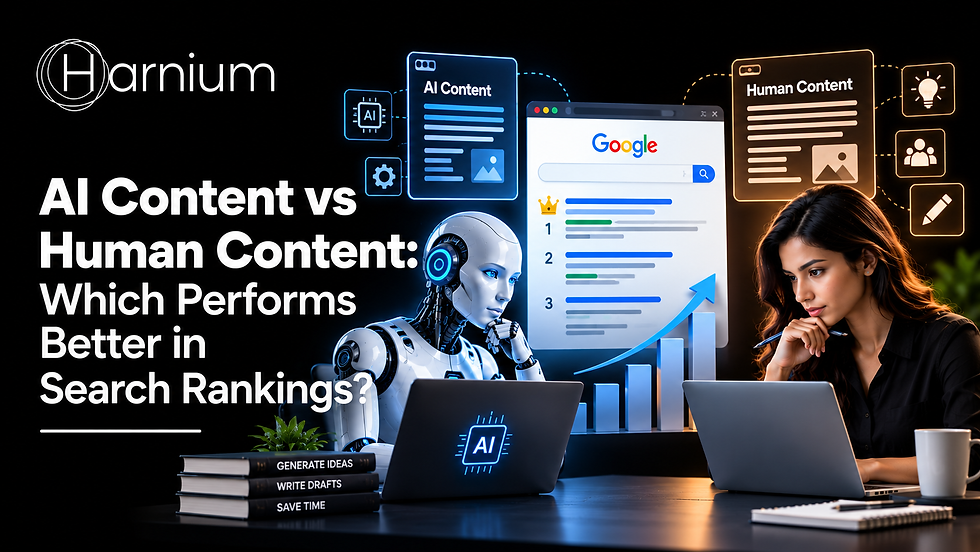
When evaluating AI Content vs Human Content, search intent should guide the writing process. Search intent refers to the reason behind a user's query, such as learning about a topic, comparing services, or making a purchase. A blog should answer the main question early and provide enough detail to satisfy the reader. AI can help identify common questions, while human writers can improve explanations and add context. For example, someone searching for AI content writing tools may want features, limitations, and practical recommendations rather than a general definition. Matching the content to this need creates a better experience and gives the page a stronger chance of competing in search results.
Keyword Optimization and Readability
Keyword optimization remains relevant to AI Content vs Human Content, but keywords should support the topic rather than dominate the article. The main keyword should appear naturally in the title, introduction, relevant headings, and body text. Related phrases can help explain the subject in greater depth. However, repeating the same keyword in every sentence can make an article difficult to read and may look unnatural. Writers should use descriptive headings, short paragraphs, simple language, and meaningful transitions. Before publishing, read the article aloud and remove repetitive phrases. The best SEO content balances discoverability with a natural reading experience instead of focusing only on keyword frequency.
Originality, Engagement, and User Experience
Originality and usefulness are essential factors in AI Content vs Human Content. A page should provide something more valuable than a basic summary of information already available online. This might include an original example, a helpful comparison, a clear explanation, or a practical checklist. Readability also matters because visitors need to find information without unnecessary effort. Relevant internal links, descriptive images, and a logical page structure can improve navigation. User engagement metrics should be interpreted carefully because no single metric guarantees higher rankings. Instead, focus on whether visitors can understand the content, find relevant answers, and take the next step without confusion.
AI Content vs Human Content: How to Combine Both for Better SEO?
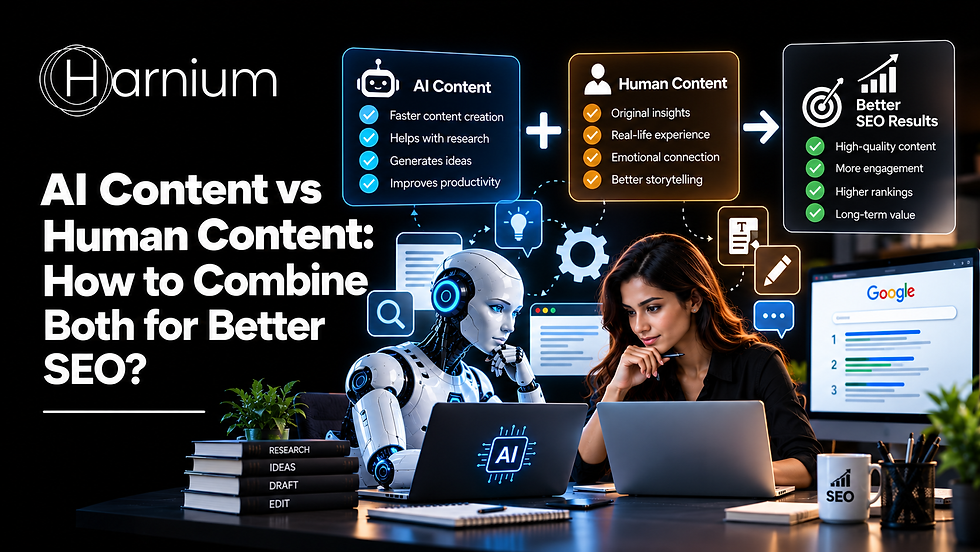
A practical AI Content vs Human Content strategy begins by assigning AI tasks that improve efficiency without sacrificing editorial quality. AI tools can suggest blog topics, organize keyword research, create outlines, and identify questions that readers may have. Writers can then verify the suggestions and select the most relevant information. For example, a content team preparing an article about local SEO can use AI to structure sections around Google Business Profile optimization, local keywords, reviews, and business listings. The writer should check current recommendations and add practical details. This process reduces preparation time while keeping the final article focused on the audience's needs.
Add Human Experience and Fact-Checking
Human review is a critical part of AI Content vs Human Content because automated drafts need editorial judgment. Check statistics, product details, technical explanations, and claims against reliable sources. Replace generic examples with realistic situations and remove sentences that do not help the reader. Writers should also ensure that the tone matches the brand and that the article answers the intended search query. For digital marketing businesses such as Harnium, a balanced workflow can support content planning and drafting while maintaining clear communication and relevant SEO information. The finished article should reflect the business's knowledge and standards rather than simply reproduce an AI-generated draft.
Follow a Simple Content Optimization Checklist
A clear workflow makes AI Content vs Human Content easier to manage across a website. Start by identifying the primary keyword and the reader's search intent. Create a useful outline, prepare the first draft, and add original insights. Next, check factual accuracy, grammar, headings, internal links, and the page title. Make sure the introduction explains the topic and that every section contributes something useful. Use plagiarism or originality tools as supporting checks, not as proof of quality. Finally, publish the article and monitor its organic impressions, clicks, and relevant conversions through tools such as Google Search Console and Google Analytics. Update the content when information changes or new questions emerge.
AI Content vs Human Content: The Best Choice for 2026

Which Content Strategy Should Businesses Choose?
The right choice in AI Content vs Human Content depends on the purpose of the page, available resources, and the expertise required. AI-assisted writing can be suitable for brainstorming, outlines, routine descriptions, and early drafts. Human-led writing is particularly valuable when a page needs original research, personal experience, expert interpretation, or a distinctive brand voice. Most businesses do not need to choose only one method. They can use AI to speed up routine tasks and rely on human writers and editors to maintain accuracy, originality, and relevance. This flexible approach supports a consistent publishing process while keeping readers' needs at the centre of content creation.
The Future of AI and Human Collaboration
In 2026, AI Content vs Human Content is better understood as a question of collaboration rather than competition. AI tools are becoming useful assistants for research, organization, and drafting, but successful content still requires clear goals and careful review. Search engines continue to reward content that is helpful and trustworthy, regardless of the writing process. Businesses that invest in subject knowledge, audience research, and thoughtful editing can create content that serves readers more effectively. As digital marketing evolves, the strongest teams will be those that use automation responsibly while protecting the quality and credibility of their published material.
Conclusion
AI Content vs Human Content does not have one universal winner for SEO in 2026. AI offers speed, efficiency, and support for content planning, while human writers contribute judgment, experience, creativity, and deeper audience understanding. Both approaches can produce useful content when supported by research, editing, and a clear purpose. For better search performance, focus on answering real questions, using keywords naturally, verifying information, and providing original value. Businesses such as Harnium can benefit from combining AI-assisted workflows with human expertise to create relevant, readable, and trustworthy content. Ultimately, the best SEO strategy is not about producing more words; it is about creating content that genuinely helps people.


Comments