
Digital Marketing for Real Estate: How to Attract Buyers?
Updated: Oct 9

At Harnium, we understand that reaching the right property buyer takes more than simply putting a property online. A property buyer rarely wakes up one morning and decides to buy a house without doing any research. A Digital Marketing for real estate can help to buy a new property to simply search online.
They search for locations. They compare properties. They look at photos and videos. They check prices, amenities, reviews, neighbourhoods, and sometimes even the reputation of the developer. Only after gathering enough information do many buyers decide whether a project is worth enquiring about or visiting.
That creates a very different marketing challenge for real estate businesses.
It is not enough to simply have a website, run an advertisement, or post property photos on social media. Your business needs to be visible where potential buyers are searching, comparing, and making decisions.
This is where Digital Marketing for Real Estate becomes valuable.
A well-planned digital strategy can help real estate businesses attract relevant audiences, showcase properties, build trust, generate enquiries, and understand which marketing activities are actually producing results.
The objective is not to be everywhere.
It is to be visible to the right people at the right stage of their property-buying journey.
Why Digital Marketing for Real Estate Matters When Buyers Start Their Property Search Online
Real estate is different from many everyday purchases.
Someone might decide to buy a pair of shoes within minutes. A property purchase can involve weeks or months of research, comparisons, discussions, financial planning, and consideration.
That means a potential buyer may interact with a real estate brand several times before making an enquiry.
They might:
Search for properties in a particular location.
Compare different projects.
Watch a property walkthrough.
Visit a developer's website.
Check social media profiles.
Look at reviews and testimonials.
Search for prices and amenities.
Return to the same project several times before contacting the sales team.
This means your digital presence has to do more than create awareness.
It needs to answer questions and reduce uncertainty.
For example, imagine someone searching for a 3 BHK apartment in a particular area.
If your project does not appear when they search, you may never enter their consideration set.
If they discover your project but find an outdated website, poor-quality visuals, incomplete information, or no clear way to enquire, their interest can disappear just as quickly.
This is why real estate marketing needs to consider the entire journey—from discovery to enquiry.

How Digital Marketing for Real Estate Helps Buyers Discover Your Property?
A potential buyer cannot enquire about a property they never discover.
Different digital channels can help businesses reach people at different stages of the buying journey.
Search Engines and Real Estate SEO
Search engines are particularly important because they allow businesses to appear when someone is actively looking for a property or related information.
For example, a buyer might search:
“2 BHK flats in Gurgaon”
or:
“new residential projects in Noida”
or:
“commercial property for sale near me”
These searches reveal something important: the person is already looking for a solution.
This is where real estate SEO can help.
Optimising project pages, location-based content, property information, FAQs, and other relevant website content can improve the chances of appearing for searches that are relevant to the business.
The goal should not simply be to attract more website visitors.
It should be to attract people who are actually relevant to the property being marketed.
Paid Advertising for High-Intent Searches
Organic visibility takes time to build.
Paid advertising can help businesses appear more quickly when potential customers are searching for relevant products or services.
For example, Google Ads can help a real estate business target searches related to a specific location, property type, project, or service.
Other platforms can serve a different purpose.
Meta Ads can help businesses reach relevant audiences on Facebook and Instagram, while LinkedIn can be useful for certain commercial or B2B real estate campaigns.
The right platform depends on the audience and campaign objective—not simply on which platform is currently popular.
Social Media for Property Discovery
Real estate is also highly visual.
A potential buyer may want to see the property before deciding whether it is worth further investigation.
This makes content such as:
Property walkthroughs
Short-form videos
Project photography
Location videos
Construction updates
Amenity showcases
Floor-plan explainers
Neighbourhood guides
useful for creating interest and helping buyers understand the property.
The role of social media is therefore not limited to “posting regularly.”
It can become part of the buyer's research process.
How Digital Marketing for Real Estate Builds Trust Before the First Enquiry
Getting someone's attention is only the beginning.
A property is a high-consideration purchase. Buyers may have concerns about the developer, location, pricing, amenities, construction progress, possession, documentation, and whether the property actually matches their expectations.
Your digital presence should help answer those concerns.
Think about what a buyer might want to know before contacting you:
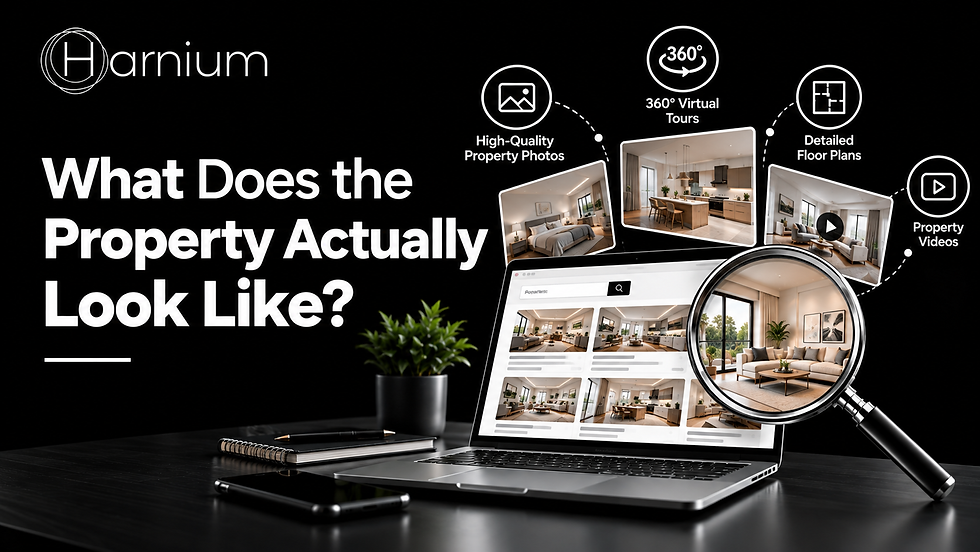
What does the property actually look like?
High-quality images, videos, walkthroughs, and visual content can provide a clearer idea of the project.
Where exactly is it located?
Location-focused content can help potential buyers understand connectivity, nearby facilities, transportation, schools, commercial areas, and other factors relevant to their decision.
Why should I consider this project?
Your website and content should clearly communicate the property's relevant features and advantages rather than simply listing specifications.
Can I trust the business?
Testimonials, reviews, project information, professional branding, transparent communication, and an updated online presence can all contribute to credibility.
This is where digital marketing becomes more than advertising.
Your website, social media profiles, search presence, content, and advertisements collectively become part of your first impression.
A buyer may never tell you that your website influenced their decision.
But the quality of that experience can influence whether they continue researching your project—or move on to another one.

How Digital Marketing for Real Estate Turns Online Attention Into Property Enquiries?
Visibility and trust are important, but there is another step:
A person can visit your website, watch a property video, or interact with an adertisement without ever contacting your sales team.
That is why the conversion journey needs attention.
Imagine someone clicks an advertisement promoting a residential project. They land on a page that contains a generic company introduction, a few stock images, and no obvious information about the property they were interested in.
A well-planned digital marketing for real estate strategy ensures that landing pages provide relevant property details, clear visuals, strong calls to action, and an easy enquiry process to guide potential buyers toward conversion.
The advertisement may have done its job.
The website did not.
A better experience would take the visitor directly to relevant information about the project, such as:
Property configurations
Location
Key amenities
Project visuals
Relevant pricing information where appropriate
Frequently asked questions
Brochure access
Enquiry form
Call option
WhatsApp option
Clear next step
The fewer unnecessary questions a potential buyer has to answer before understanding the offer, the easier it becomes for them to continue.
This is also why lead generation should not be treated as a completely separate activity from website development, advertising, SEO, and content.
All of these elements influence what happens after someone discovers your business.

How Digital Marketing for Real Estate Helps You Measure What Is Actually Working?
One of the biggest advantages of digital marketing for real estate is that businesses can measure much more than traditional advertising typically allows.
But there is an important distinction:
More activity does not always mean better results.
For example:
10,000 website visitors sounds impressive.
But what if only 5 people enquire?
Similarly:
500 leads may sound better than 100 leads.
But what if most of those leads are irrelevant, unreachable, or outside your target budget?
This is why real estate businesses should look beyond vanity metrics.
Depending on the campaign, useful metrics can include:
Website traffic
Search visibility
Click-through rate
Cost per click
Cost per lead
Conversion rate
Qualified enquiries
Booked site visits
Customer acquisition cost
Return on ad spend
The exact metrics will vary depending on the business.
For example, a campaign designed to increase awareness may focus on reach and engagement, while a lead-generation campaign should pay closer attention to enquiries and lead quality.
The important thing is to establish what success means before measuring it.
This allows businesses to identify which channels deserve more attention and which activities may need to be changed.
It also makes marketing decisions less dependent on assumptions.

How to Build Digital Marketing for Real Estate Around the Complete Buyer Journey?
The strongest real estate strategy is rarely about choosing one digital channel and expecting it to do everything.
Instead, different activities can support different stages of the journey.
Attract
Use SEO, paid advertising, social media, content, and other relevant channels to help potential buyers discover your business or property.
Inform
Give them useful information about the project, property, location, amenities, pricing, process, and other questions they are likely to have.
Build Trust
Use professional visuals, reviews, testimonials, educational content, project updates, and a credible online presence to reduce uncertainty.
Convert
Make it easy for interested buyers to enquire through forms, calls, WhatsApp, brochures, bookings, or other relevant actions.
Nurture
Not every property buyer is ready to make a decision immediately. Follow-up, remarketing, useful content, and consistent communication can help keep your business relevant while the buyer continues evaluating options.
Measure
Track what is happening at each stage and use the data to improve the strategy.
This creates a much more useful framework:
Attract → Inform → Build Trust → Convert → Nurture → Measure
At Harnium, our digital marketing services can support different parts of this journey through SEO, social media marketing and management, website development and management, performance marketing, Google Ads, Meta Ads, content, e-commerce and other digital solutions.
The exact combination should depend on the real estate business, its audience, location, goals, and stage of growth.

Ready to Build a Stronger Digital Presence for Your Real Estate Business?
If your property is worth discovering, your digital presence should make sure the right buyers can actually find it.
At Harnium, we help businesses build digital strategies that go beyond simply generating visibility. From SEO and social media to website development and performance marketing, our approach is focused on connecting the right audience with the right message and creating a smoother path from discovery to enquiry.
Whether you are a real estate developer, broker, agent, or property-focused business, a well-planned digital marketing for real estate strategy can help you identify the right digital channels for your goals and build a strategy around measurable outcomes.
Don't just market your property. Make it easier for the right buyer to discover, trust, and enquire about it.
Talk to Harnium today and start building a digital marketing strategy designed around your real estate business.


Comments