
Why Your Competitors Are Ranking Above You on Google?


Competitors Ranking Higher on Google Because Their Content Matches Search Intent
One of the biggest reasons behind competitors ranking higher on Google is that their content may match what users want to find.
Many businesses choose keywords simply because those keywords have high search volume. But ranking is not only about putting popular keywords on a page. Google wants to understand whether the page answers the user's question.
For example, imagine someone searches for best digital marketing agency for small businesses. If your page only talks about your company history, office location, and services, it may not fully satisfy the search intent.
A competitor may create a detailed page explaining what small businesses should look for in an agency, common marketing challenges, pricing considerations, services required, and how to choose the right partner. That page is more useful to the person searching, so it has a stronger chance of ranking.
Before creating any page, think about why someone is searching for that keyword.
Are they looking for information?
Are they comparing different options?
Are they ready to purchase a service?
Do they want a quick solution to a problem?
Once you understand the intention behind a search, creating useful content becomes much easier.
You should also review the pages currently ranking on Google's first page. Look at the type of information they provide and then create something more useful instead of simply copying the same points.

Competitors Ranking Higher on Google Due to Better Website Content
Another common reason for competitors ranking higher on Google is that they have invested more effort into their website content.
Google needs enough information to understand what your page is about. A service page with only 200 or 300 words may struggle against competitors who have created detailed, helpful pages around the same topic.
However, this does not mean you should write thousands of words just to make a page longer.
A strong page should explain the topic clearly and answer important questions visitors may have. If you are offering SEO services, for example, your page could explain what your SEO process includes, how keyword research works, why technical SEO matters, how long SEO generally takes, and what businesses should expect from an SEO campaign.
The content should feel natural and useful.
Another mistake many businesses make is targeting too many keywords on one page. One page might talk about SEO, social media marketing, Google Ads, website development, and branding at the same time.
This can make it difficult for search engines to understand the main subject of the page.
Instead, create dedicated pages around individual services and topics.
When your content is clearly organized, both Google and visitors can understand your website more easily.

Your Competitors Have Stronger Backlinks and Online Authority
Backlinks continue to play an important role in SEO.
A backlink is created when another website links to your website. Google can see relevant and trustworthy backlinks as signals that your website has useful or credible information.
Suppose your website and your competitor's website have similar content and website structure. However, your competitor has been mentioned by industry blogs, business directories, news websites, and respected websites within the same industry.
Google may have more reasons to trust that website.
The mistake businesses often make is focusing only on the number of backlinks.
Having 1,000 poor-quality links does not automatically make a website stronger than one with 100 relevant and trusted links.
Relevance and quality matter.
You can improve your backlink profile through useful blog content, guest contributions, business directories, partnerships, industry mentions, original research, case studies, and valuable resources that other websites naturally want to reference.
Competitor backlink analysis can also be extremely useful.
Check which websites are linking to your competitors. You may discover industry directories, blogs, publications, or resource pages where your business could also be listed.
Instead of blindly building links, focus on earning links from websites that make sense for your industry.

Their Website Provides a Better User Experience
SEO is not limited to keywords and backlinks. The experience people have after visiting your website also matters.
Think about your own behavior online.
If you open a website and it takes too long to load, you probably leave.
If the text is difficult to read, the navigation is confusing, or the website looks broken on your phone, you may immediately return to Google and choose another result.
Your potential customers behave in the same way.
This is why website speed, mobile usability, navigation, design, and page structure are important.
Your competitors may have faster websites, clearer menus, better internal linking, simpler layouts, and more mobile-friendly pages.
Start by checking how quickly your main pages load.
Large images, unnecessary plugins, heavy scripts, and poorly optimized website elements can make pages slow.
Your content should also be easy to scan. Use clear headings, short paragraphs, useful images, bullet points where necessary, and obvious calls to action.
Visitors should quickly understand who you are, what you offer, and where they should go next.
Internal linking is another simple improvement that many websites ignore.
When publishing a blog about local SEO, for example, you can naturally link to your SEO service page or another relevant article.
This helps visitors discover more information and makes it easier for search engines to understand the relationship between your website pages.
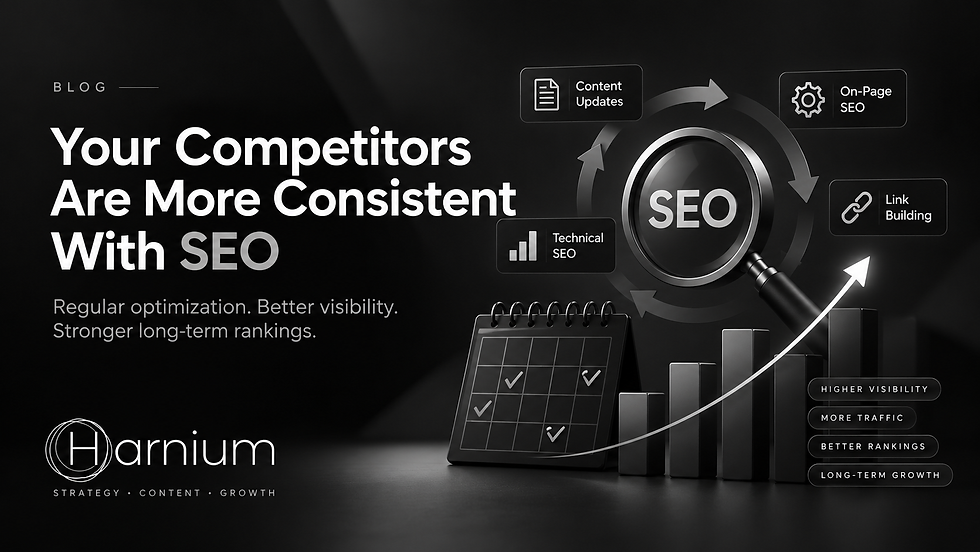
Your Competitors Are More Consistent With SEO
One of the most overlooked reasons businesses lose rankings is inconsistency.
Some companies work on SEO for one month, publish a few blogs, build some backlinks, and then stop because they do not immediately see results.
Meanwhile, their competitors may have been improving their website consistently for several months or even years.
They keep updating older pages.
They publish helpful new content.
They improve internal links.
They fix technical problems.
They earn new backlinks.
They research new keywords.
They monitor which pages are gaining or losing visibility.
Small improvements made consistently can create a significant advantage over time.
Imagine two businesses starting with similar websites.
One company publishes two useful articles every month and improves its key service pages regularly. The other company publishes five articles in one month and then does nothing for the next six months.
After a year, the first company will have built a much stronger content library.
SEO should therefore be treated as an ongoing marketing activity rather than a one-time project.
You should regularly check your keyword rankings, organic traffic, impressions, click-through rates, backlinks, and high-performing pages.
You should also identify pages that receive impressions but very few clicks. Sometimes changing the page title or meta description can improve performance.
Pages that rank between positions 5 and 20 are also worth focusing on because small improvements may help push them closer to the top results.

Your SEO Strategy Is Missing Important Technical and On-Page Details
Sometimes a website has excellent content but still struggles to rank because basic SEO elements have been overlooked.
Start with your page titles.
Every important page should have a clear and relevant title describing what the page offers. Avoid using the same title across multiple pages.
Your main keyword should also appear naturally in important areas such as the page title, main heading, introduction, URL, and relevant subheadings where appropriate.
Do not force keywords into every sentence.
Write for people first.
Your images should also be optimized with descriptive file names and suitable alt text when relevant.
Another common problem is duplicate content.
If several pages contain almost identical information, search engines may struggle to determine which page should rank.
Technical issues can create similar problems.
Broken links, incorrect redirects, pages accidentally blocked from search engines, missing XML sitemaps, crawl errors, duplicate URLs, and poorly configured canonical tags can all affect website visibility.
Local businesses should also pay attention to local SEO.
Make sure your business name, contact information, website details, business categories, opening hours, and location information are accurate wherever your business appears online.
Your Google Business Profile should be complete and regularly updated. Reviews can also help potential customers trust your business and improve your overall local presence.
Most importantly, avoid looking at SEO as a collection of random tricks.
The websites that perform well usually combine several things: helpful content, technically healthy pages, good user experience, relevant links, strong topical coverage, and consistent optimization.
Final Thoughts
Seeing competitors above your website on Google does not necessarily mean their business is better than yours. It normally means their website is giving Google stronger signals about relevance, usefulness, authority, and user experience.
Start by studying the websites currently ranking above you.
Check their content depth, keywords, backlinks, page structure, website speed, internal links, and overall user experience.
Then compare these areas with your own website.
Do not try to improve everything in one day. Begin with your most important pages and fix the biggest gaps first. Improve existing content, create pages around missing topics, strengthen internal linking, build relevant backlinks, and remove technical problems.
SEO growth usually comes from repeated improvements rather than one major change.
When you understand why your competitors are winning and build a clear strategy around those gaps, you stop guessing. You begin making changes based on what users are searching for and what search engines are rewarding.
That is how a website gradually moves from being hidden below competitors to becoming one of the businesses customers discover first on Google.


Comments